EptaKode Analysiscode-analysis
livesince 2026eptakode.com ↗
Every program is a set of promises: what it will accept, what it will protect, what it will never do. Every program also keeps a second, truer account in its behaviour, and the two do not always agree. EptaKode is our instrument for reading that second account. It lets security and engineering teams see what their code actually does, follow the path of a single value through a whole system, and keep what they find as evidence others can examine and reproduce.
EptaKode lifts compiled code and bytecode into one shared representation, so the same way of seeing applies across C and C++, every JVM language, PHP, Perl and the binaries Binary Ninja understands.
Flows: following a value to its consequence
A vulnerability is rarely a single line. It is a journey: a value enters where it should not be trusted, travels through functions that were each written with good intentions, and arrives somewhere it can do harm. A Flow makes that journey visible.
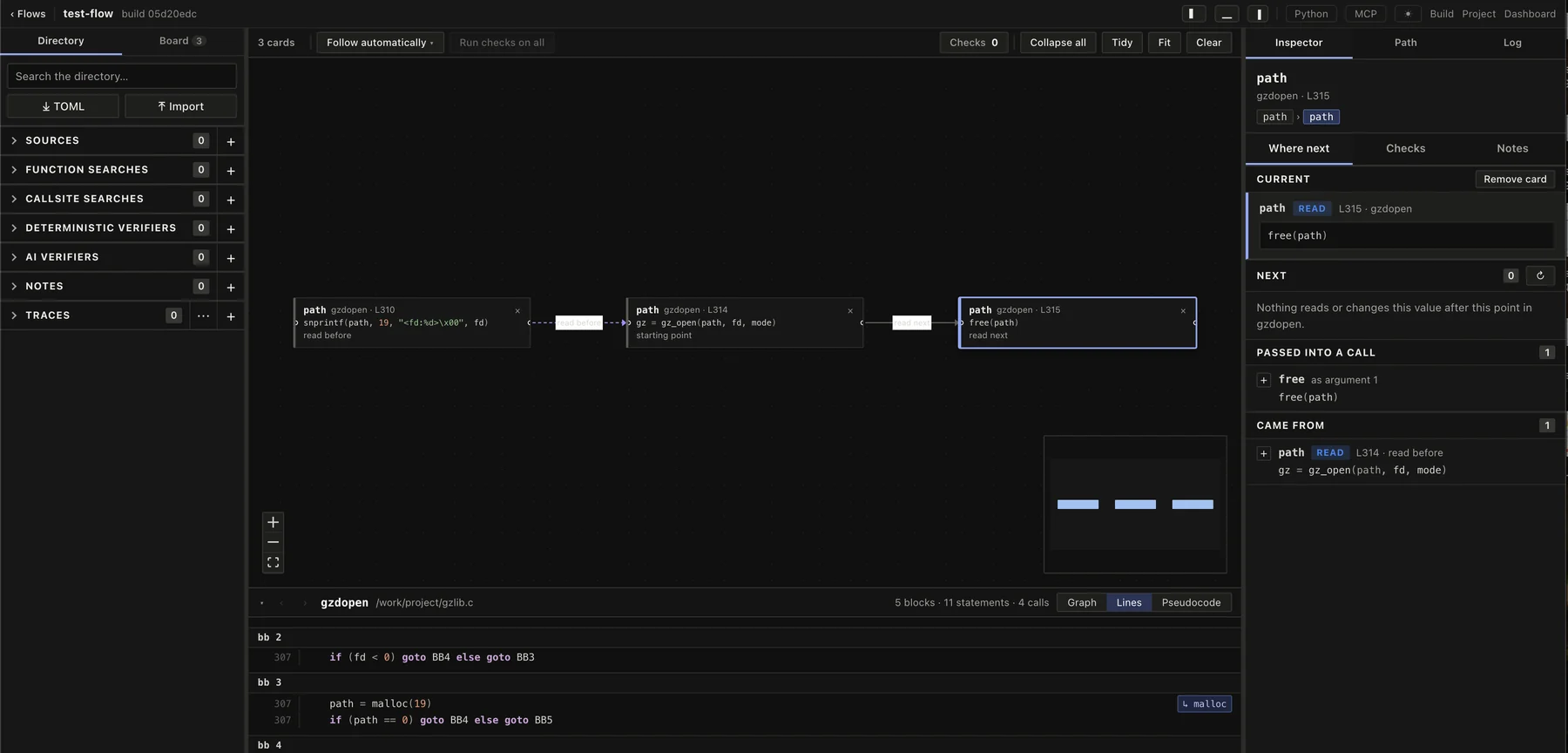
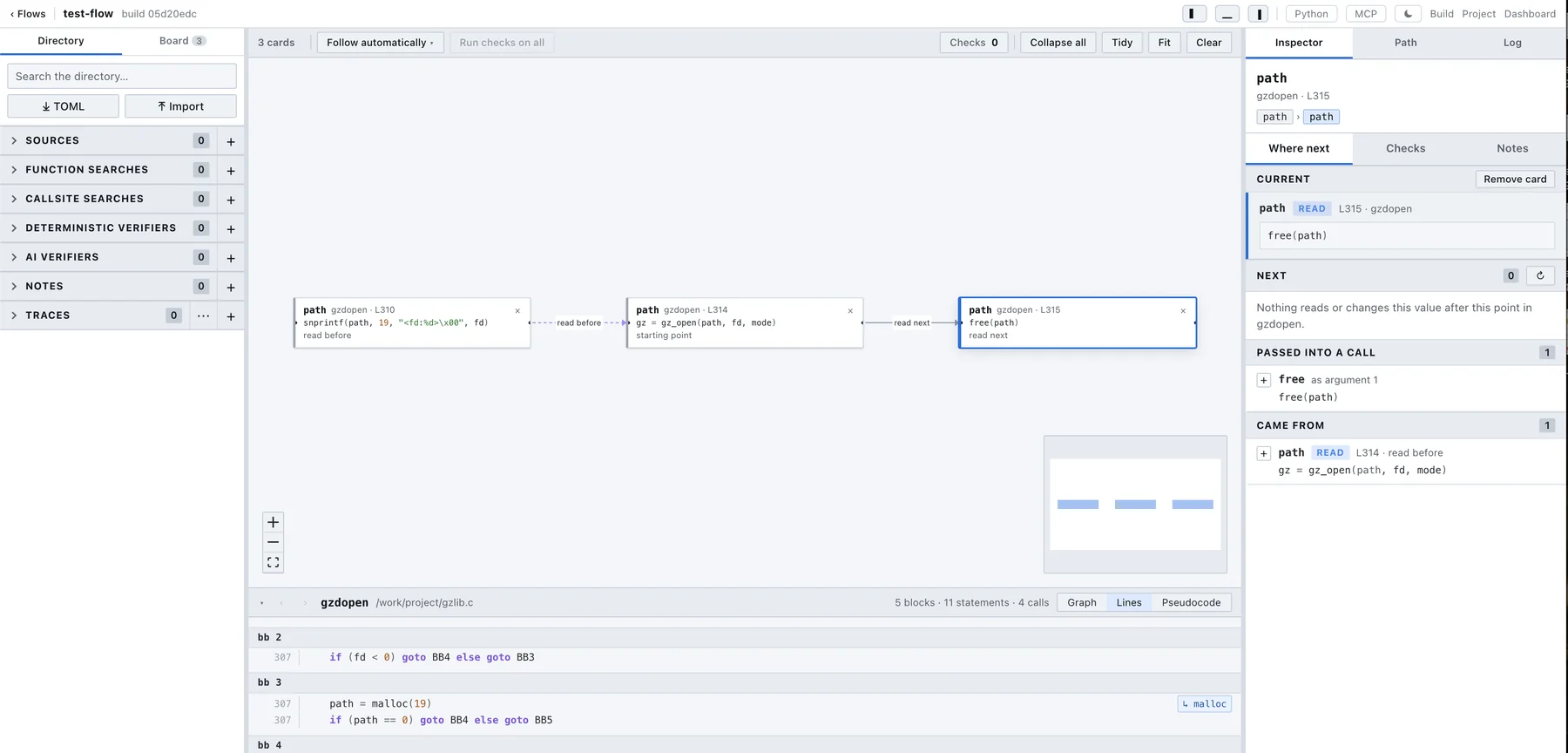
- Trace a variable across function calls, with every step and its code in view
- Check each step with verifiers: deterministic rules that give the same answer on every run, and AI judgements of a single step against a threshold you set
- Keep sources, searches, verifiers and notes in a Directory your team can export, import and reuse as TOML
- Share every note, bookmark and trace with the team, kept with the build it describes
Call graphs: the shape of a system
Before you can judge one path, you need to see the whole terrain: who calls whom, what a function can reach, what depends on it. A Call graph maps that terrain so architecture and exposure questions can be answered without reading every file.
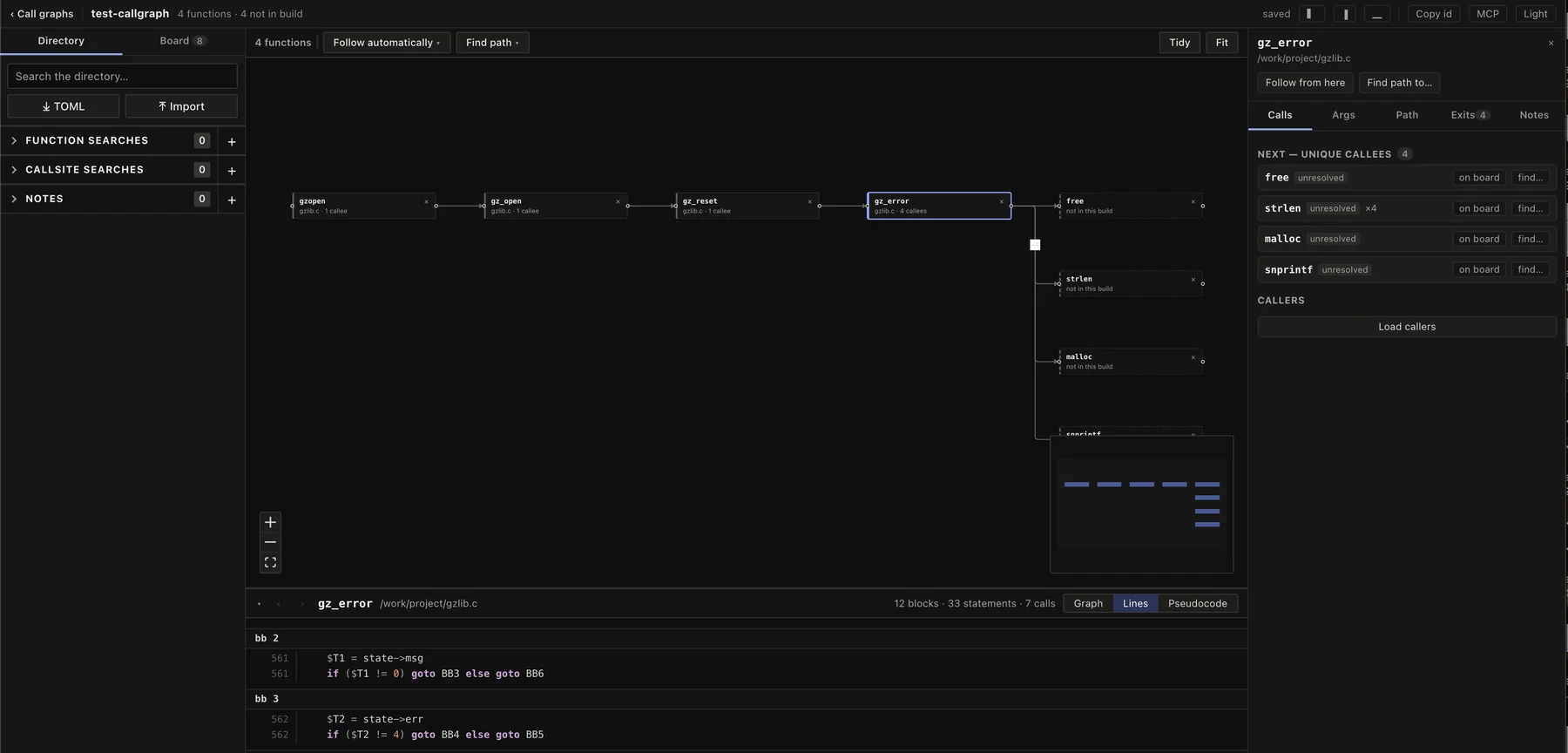
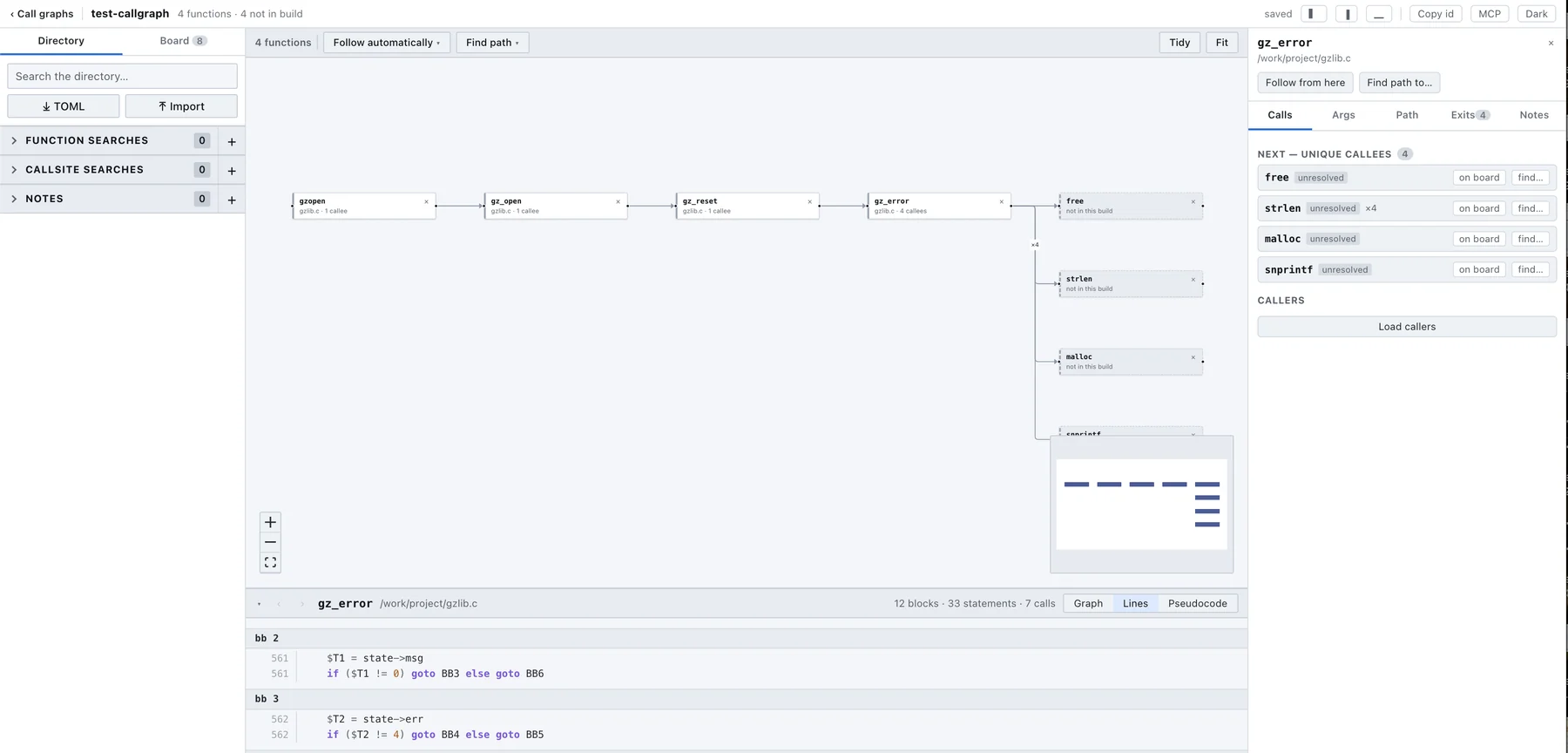
- One row per callee, with every call that reaches it
- Follow calls automatically to the depth you choose, or ask whether one function can reach another
- Load callers on demand, to see what depends on a function before you change it
The Python SDK: your own questions, in code
Every view in the platform is also an API. The same representation that powers the workspaces is open to you as a Python library, so a question nobody has built a screen for can still be asked, answered and repeated.
import eptakode

api = eptakode.LocalAPI("./build")

# Functions, call sites, control flow and variables, in plain Python
for fn in api.search_functions():
    print(fn.name)
from eptakode.models.engine.verifier import DeterministicVerifier, AIVerifier
# A rule that gives the same answer on every run
DeterministicVerifier(
name="unbounded copy",
description="memcpy with a length that was not checked",
on_match="end",
match_query_source="...", # a PyQL rule
)
# A judgement of one step, against a threshold you set
AIVerifier(
name="length is checked",
statement="{var} was compared against a size limit earlier.",
threshold=70,
on_match="continue",
)- One interface across C and C++, every JVM language, PHP, Perl and binaries
- Search functions, walk call sites and control flow, and follow variables, without reading each file
- Write verifiers once, then reuse them from the SDK, from a Directory, or over MCP
- Run it on your own machine against a downloaded build, or against the platform
Your assistant, inside the analysis
Understanding should not stop at the edge of the browser. EptaKode connects Claude, your IDE or any MCP client directly to a Flow or a Call graph. You decide which one the assistant works in, it cannot create or switch them, and everything it does is saved there for your team to review. When nothing may leave the building, a local server reads a downloaded build entirely offline.
Built for organisations that must be certain
- Evidence, not opinion. Every finding carries its path, its code and the checks that judged it.
- Shared by design. Teams work in the same Flows and Call graphs, with a full history of what was done.
- Your models, your boundary. Bring your own model or use the platform default, and keep code and data inside your environment where required.
Filed under code-analysis
Notes on EptaKode Analysis
- 2025-04-07Static Analysis via Lifted PHP (Zend) Bytecodecode-analysis
- 2025-02-07Is C++ Just C with Structs and Functions, or Is It More?code-analysis
- 2024-08-05Introduction to Eptalights Code Analysis Platform for Code Analysiscode-analysis
- 2024-08-05Why We Chose GCC GIMPLE Over LLVM IR for C/C++ Code Analysiscode-analysis